1986
China Arts and Crafts
The family biography records a February article introducing Artificial Marble Paintings as an exploration combining traditional art and modern technology.[1]
LIU, FENG · ART IN STONE
THE ARTIST
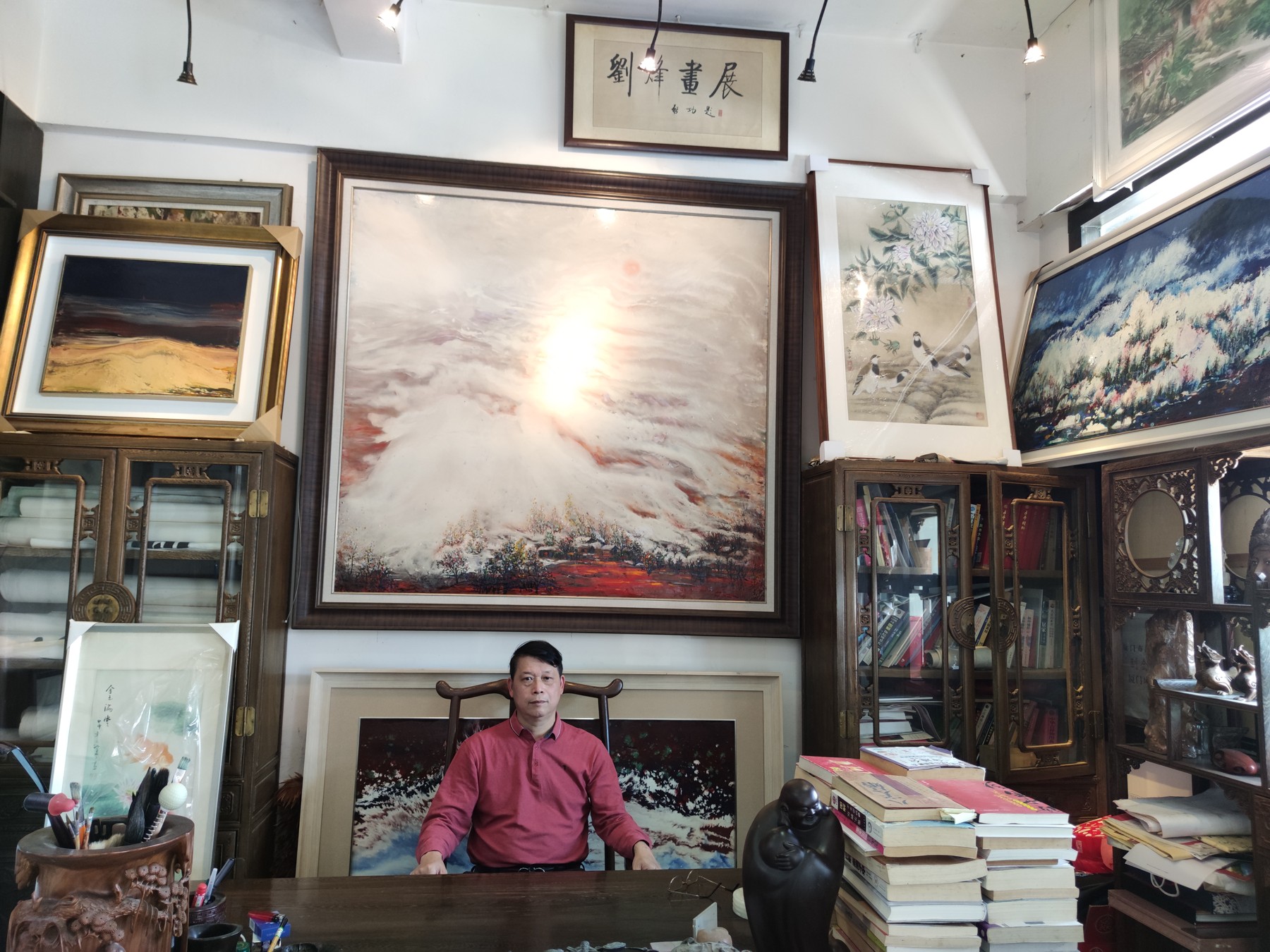
Liu, Feng was an artist from Zhangping, Fujian, whose work spanned painting, material research, and decorative art. Through Artificial Marble Paintings (Stone Powder Paintings), he explored landscapes, figures, and abstract imagery, while extending his practice into public spaces, gallery work, and writing.[1] [2] [4]
Liu, Feng
In the preface to Geomantic Omen, Liu, Feng recalled the visual world of his rural childhood: decorations in old houses, clay dragon and phoenix sculptures in ancestral halls and small temples, carved screens, narrative murals, and New Year pictures. These everyday encounters with images and craftsmanship helped shape his understanding of decorative art.[4]
After graduating from Fujian School of Arts and Crafts in 1984, he joined a marble factory in Zhangping. That same year, he began developing Artificial Marble Paintings, exploring how materials associated with stone production could become a language for painting.[1] [2]
From July 1986 to 1988, he studied in the Department of Special Arts and Crafts at the Central Academy of Arts and Crafts. The family biography records collaboration with Yuan, Yunfu on murals for public spaces including the Diaoyutai State Guesthouse in Beijing and Shijiazhuang Railway Station. His education and decorative practice brought together pictorial expression and the relationship between art, architecture, and its surroundings.[1]
The 1987 newspaper account records support from the academy for his combined studies and research, including a subsequent waiver of tuition fees. A research institution outside Beijing also supplied materials. This support helped sustain an investigation that had begun in the factory.[3]
The Dictionary of Arts and Crafts includes a dedicated entry on Artificial Marble Paintings. It describes a medium in which natural stone powder, mineral pigments, and related materials produce textures with the character of stone. Variations in colour and pattern support abstract and semi-representational imagery.[2]
The entry also discusses connections with oil painting, polished lacquer painting, and low relief, and the medium’s potential for murals and environmental decoration. Liu, Feng’s exploration concerned both the subjects he depicted and the ways materials could carry colour, depth, and spatial effects.[2]
His paintings bring recognisable subjects—mountains, rivers, flowers, and figures—into dialogue with distinctive material textures. According to his family, he did not pass on his technique during his lifetime. The surviving originals offer a lasting record of that individual practice.[8]
1986
The family biography records a February article introducing Artificial Marble Paintings as an exploration combining traditional art and modern technology.[1]
1987
The family biography records coverage in issue 8712 of a documentary series produced by the Central Newsreel and Documentary Film Studio.[1]
1988
The family archive preserves images of the artist and his work from issue 15 of Banyue Tan.[1] [3]
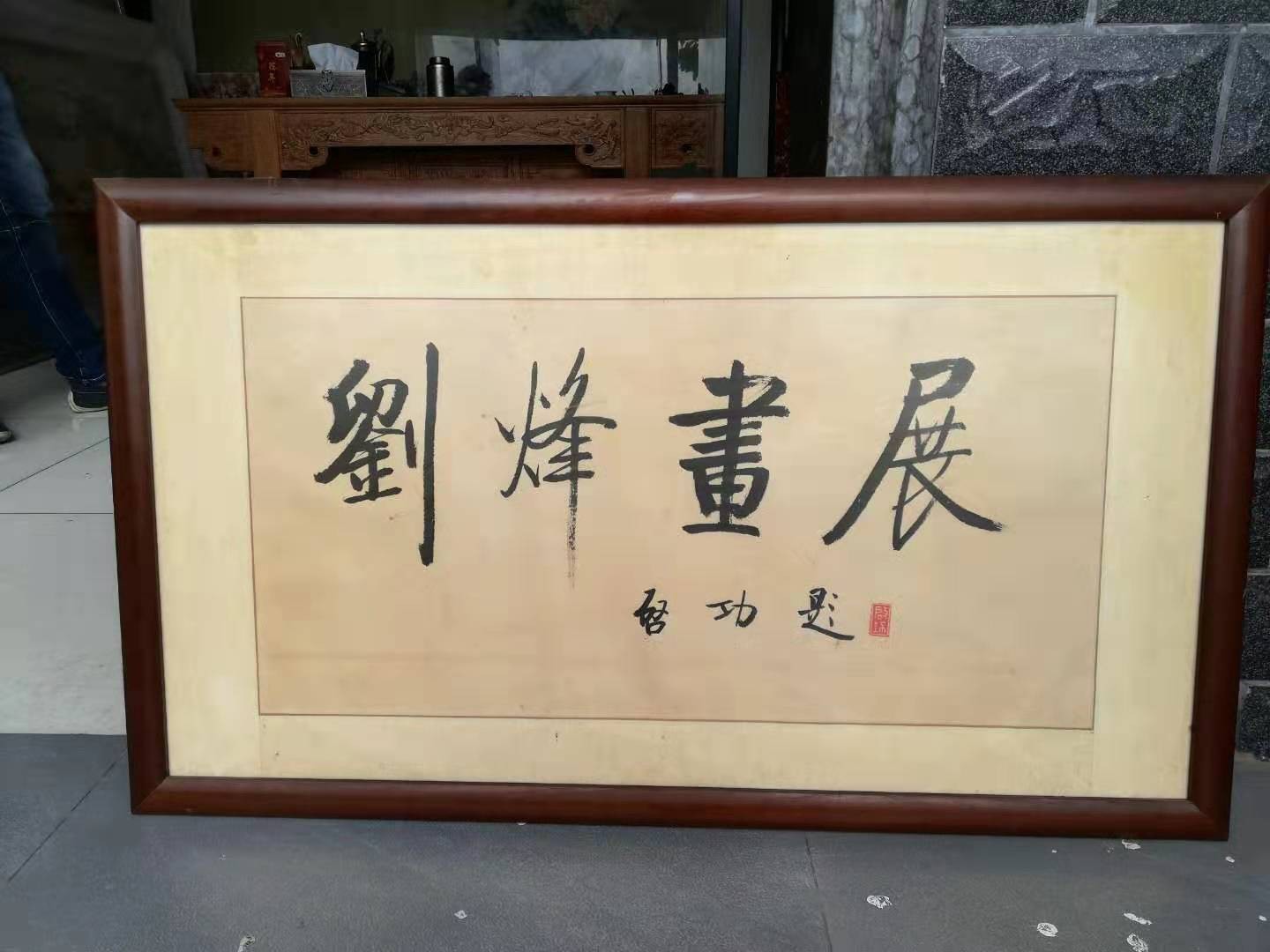
The family biography records an exhibition of Liu, Feng’s Artificial Marble Paintings at the Central Academy of Arts and Crafts on 1 May 1988, presided over by Zhang, Ding. Qi, Gong wrote the exhibition title; a photograph of the inscription survives in the family archive.[1] [5]
He subsequently taught in Xiamen while continuing his art practice. The family biography records repeated visits to Malaysia and Singapore for art-related business and exchange from the 1990s until 2008, including an exhibition of his Artificial Marble Paintings in Malaysia in 2000.[1]
In 2008, he opened Feng Sheng Shui Qi Gallery on Wushipu Oil Painting Street in Xiamen, continuing to exhibit paintings and work in the arts until 2025. The gallery brought together his painting, decorative practice, and writing.[1]
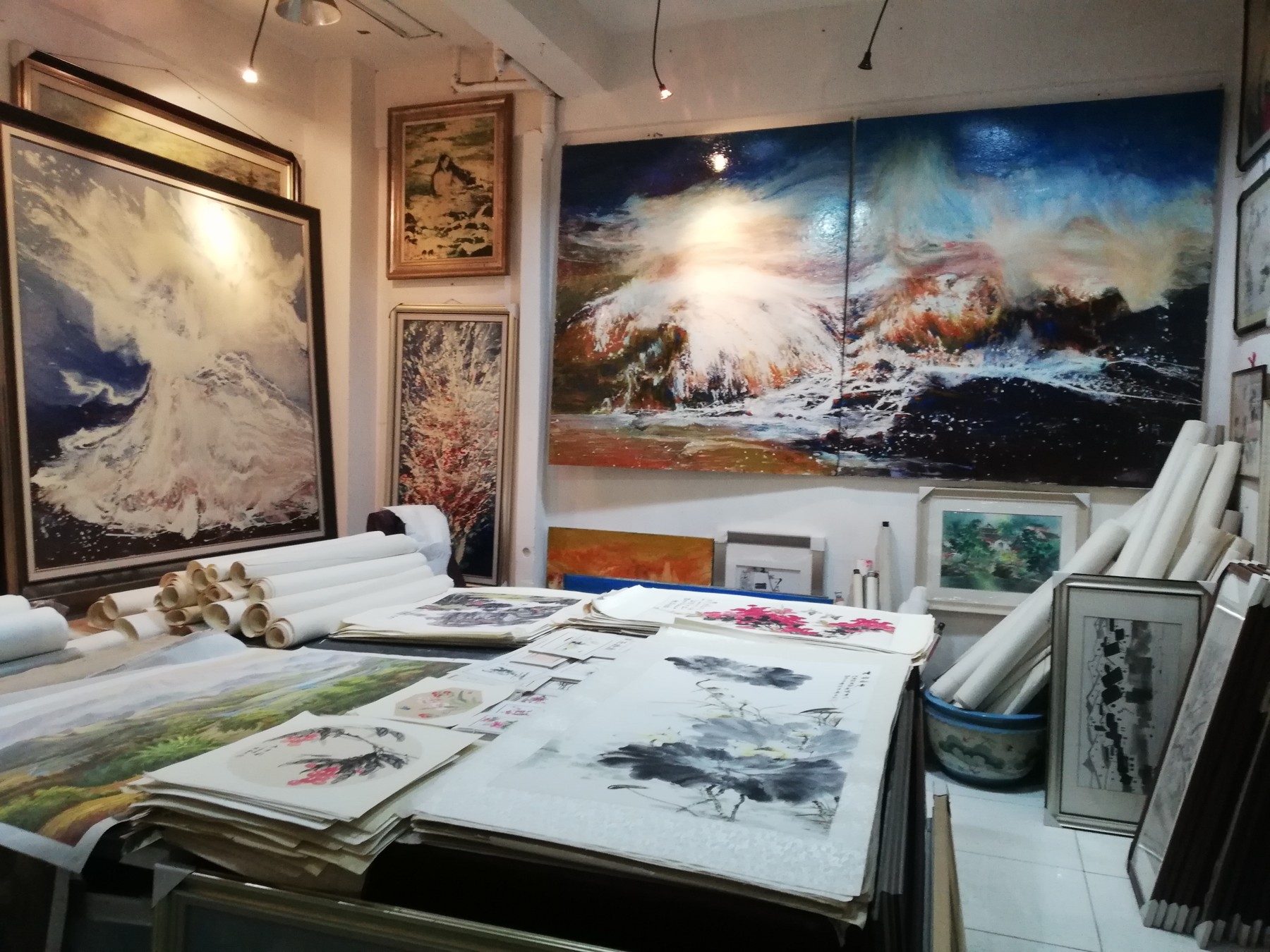
Photographs of the gallery, exhibition displays, and installed paintings document the different settings in which the works were encountered. Alongside his decorative practice, these images offer another perspective on the life of the paintings beyond the studio.[6]
Fujian Sculpture Society
The certificate records membership from 23 November 2013.
Fujian Artists Association
Membership certificate issued in March 2014.
School of Art, Heilongjiang University
Appointment letter dated 7 January 2016.
Arts and Crafts Research Institute, Fuzhou University
Appointment period: January 2018–December 2022.
Published by Lujiang Publishing House in 2012, Geomantic Omen: Auspicious Decorative Art examines traditional auspicious motifs through aesthetics and folk culture. It considers birds and flowers, landscapes, figures, calligraphy, and objects, and their use in domestic and professional spaces.[1] [4]
In the preface, Liu, Feng grounded his discussion in practical experience and in the relationship between auspicious art and everyday settings. He emphasised the coordination of decoration with its natural surroundings, seeking environments that felt harmonious and comfortable.[4]
He understood auspicious art as a form of symbolic imagery, exploring how traditional motifs express wishes for happiness, beauty, peace, and harmony. Rural decoration and festival customs appear in his writing as cultural experiences closely connected to daily life.[4]
His writing adds another dimension to the paintings: an interest in cultural meaning, lived experience, and the relationship between people and their surroundings, alongside his investigations of materials and form.[4]
Graduated from Fujian School of Arts and Crafts, joined the Zhangping marble factory as a designer, and began developing Artificial Marble Paintings.
Studied in the Department of Special Arts and Crafts at the Central Academy of Arts and Crafts, contributing to murals for spaces including the Diaoyutai State Guesthouse and Shijiazhuang Railway Station.
Received a Chinese invention patent in January. Yuan, Yunfu’s essay “Liu, Feng and Stone Powder Painting” appeared in Guangming Daily on 7 November, page 2.
Exhibited at the Central Academy of Arts and Crafts on 1 May. The family biography records Zhang, Ding presiding over the exhibition; Qi, Gong wrote its title. Images of the artist and his works also appeared in issue 15 of Banyue Tan.
The family biography records repeated art-related business and exchange in Malaysia and Singapore through to 2008.
The family biography records an exhibition of his Artificial Marble Paintings in Malaysia.
Opened his gallery on Wushipu Oil Painting Street in Xiamen, continuing to exhibit paintings and work in the arts.
Geomantic Omen: Auspicious Decorative Art was published by Lujiang Publishing House.
A certificate records his role as a council member and membership from 23 November.
Membership certificate issued in March.
Received an appointment letter from the School of Art, Heilongjiang University, dated 7 January.
Appointed researcher in Artificial Marble Paintings at the Arts and Crafts Research Institute, Fuzhou University, for January 2018–December 2022.
Passed away on 13 September, leaving a distinctive body of paintings and writings.
Compiled from the family’s biographical archive, newspaper records, a dictionary entry, the original book preface, and professional certificates. Institutional names and titles are translated for this website.